A living tradition from Japan

Meet Kokeshi,
One Village at a Time.

Explore the regional traditions, makers, tools, stories and places behind Japan’s hand-turned wooden dolls.

Independent · English-first · Sources visible

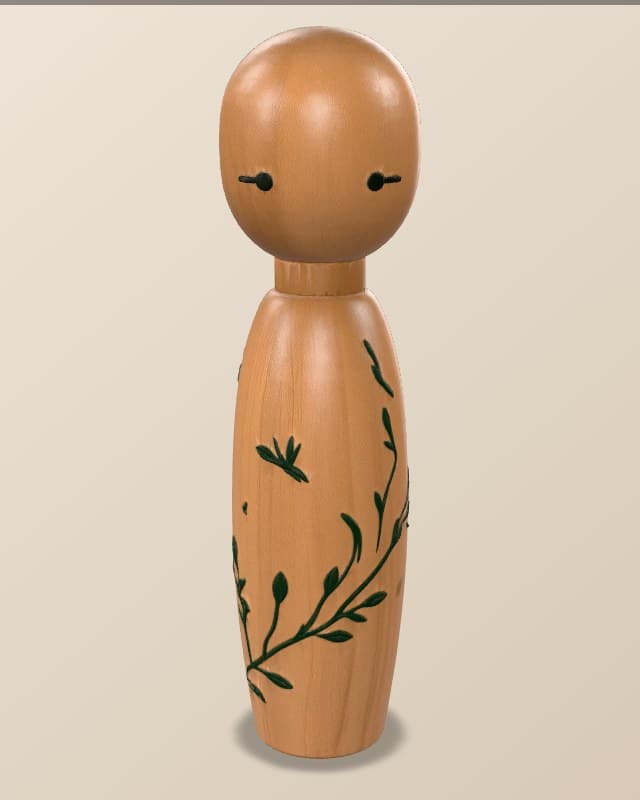
Static front render of the original Archive Turn AI-assisted pale wooden object study with a dark botanical motif
OBJECT06AI STUDY
11 regional groups24 checked sources
Archive Turn · original AI-assisted 3D study · not a reference objectView the study

Research release · 01

A field guide that shows its working.

An eleven-group Tōhoku index, named official sources and visibly bounded research fields.

11
regional tradition records
5
source-checked maker records
16
source-linked place records
24
cited source records

What is kokeshi?

More than a wooden doll.

Kokeshi connect woodturning, place, travel, play, collecting and individual makers. Their spare forms may look simple; the histories around them are not.

Read the introduction

Regional records

Explore the traditions

Browse the eleven regional groups used by the current Tohoku economic bureau index. Historic classification differences remain visible rather than erased.

View all traditions
Partial research

Fukushima City and Tsuchiyu Onsen, Fukushima Prefecture

Tsuchiyu Kokeshi

土湯系こけし

A Fukushima tradition centred on Tsuchiyu Onsen. The Fukushima Museum describes a snake-eye ring on the crown, a red kase hair ornament and rokuro body lines.

View the research record
Partial research

Zaō Onsen, Yamagata Prefecture

Zaō Takayu Kokeshi

蔵王高湯系こけし

A Yamagata regional group associated with Zaō Onsen. This record publishes classification and place; object-level identification guidance is still being researched.

View the research record
Partial research

Yamagata, Yonezawa and Tendō, Yamagata Prefecture

Yamagata Kokeshi

山形系こけし

A regional group associated with Yamagata City and other Yamagata Prefecture centres. Local official material distinguishes it from Zaō and Hijiori traditions.

View the research record
Partial research

Hijiori Onsen, Yamagata Prefecture, with related production in Miyagi

Hijiori Kokeshi

肘折系こけし

A regional group centred on Hijiori Onsen and also represented in Miyagi’s official five-group craft designation. Its cross-prefectural history requires more than a single-place label.

View the research record
Partial research

Naruko Onsen, Miyagi Prefecture

Naruko Kokeshi

鳴子系こけし

A Miyagi tradition associated with Naruko Onsen and included in the national designation for Miyagi traditional kokeshi. The current record connects the lineage to official craft and museum sources.

View the research record
Partial research

Sendai and Sakunami Onsen, Miyagi Prefecture

Sakunami Kokeshi

作並系こけし

A Miyagi tradition linked with Sendai and Sakunami. Miyagi official material describes a slender form and a crab-like chrysanthemum motif, while individual makers continue to vary within the lineage.

View the research record

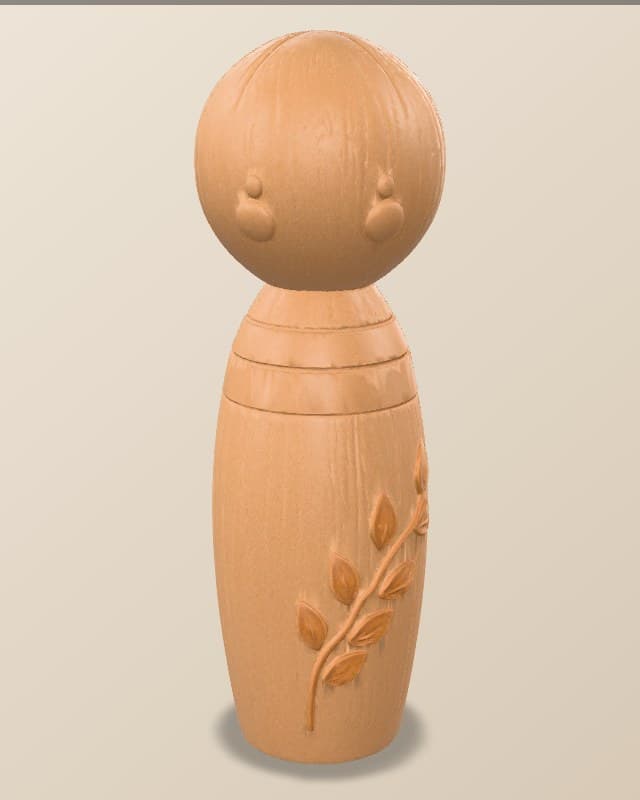
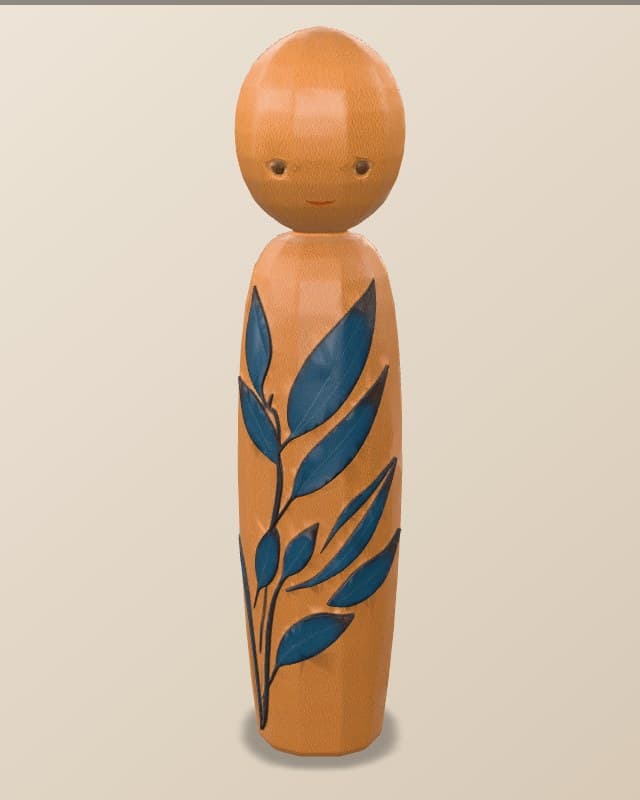
Figures are editorial placeholders, not tradition-identification silhouettes.

Places, with context

A map that admits what it does not know.

Explore source-backed regions and institutions without invented coordinates, opening hours or visitor access. The visual map and the accessible list always tell the same story.

Open the regional map
regionPartial research

Hanamaki and the Nanbu research area

花巻・南部地方

Iwate Prefecture

Hanamaki City Museum has presented Nanbu kokeshi in its public lecture programme, and Iwate’s cultural encyclopedia lists the group; the wider tradition also extends beyond the city.

From tree to object

How kokeshi are made

The eight steps published for Miyagi traditional kokeshi, from drying the wood to a final coat of wax.

Read the full process
  1. 01

    Drying the wood

    The bark is peeled and the logs are left to dry naturally for six months to a year. Miyagi Prefecture names mizuki (dogwood), itaya maple and urihada maple among the woods used.

  2. 02

    Cutting to length

    The dried logs are cut to the sizes needed for the piece.

  3. 03

    Removing excess wood

    Unneeded parts are cut away to leave blocks for the head and body.

  4. 04

    Turning the head and body

    On a spinning lathe the maker shapes the head and the body with a turning plane (kanna). The official standards specify a horizontal lathe for Naruko and a vertical lathe for Tōgatta, Yajirō and Sakunami.

  5. 05

    Polishing

    The turned surfaces are smoothed with sandpaper or scouring rush (tokusa).

  6. 06

    Joining head and body

    The head and body are driven together by insertion (sashikomi) or fitting (hamekomi). For Naruko kokeshi the Government of Japan describes a hole cut in the body for the neck, with the head attached by friction while the lathe turns.

  7. 07

    Painting by hand

    The face and the body patterns are painted. A Naruko maker quoted by the Government of Japan paints the eyes and eyebrows first and says they decide whether a piece turns out well.

  8. 08

    Finishing with wax

    A coat of wax completes the kokeshi.

Meet the makers

Names only after the source does.

The first maker records come from prefectural and municipal channels. No quotation, philosophy or workshop access is inferred from a name.

Browse sourced maker records
Partial research

Miyagi Prefecture

Teruyuki Hiraga

平賀 輝幸

Listed by Miyagi Prefecture as a Sakunami-lineage kokeshi maker in Project Takumi, a group for younger successors to designated traditional crafts. The prefecture features his Masamune and Megohime kokeshi.

View sourced record
Partial research

Miyagi Prefecture

Yasuhiro Sato

佐藤 康広

A Tōgatta kokeshi maker in Miyagi's Project Takumi. His miniature Nikkō tea set won the Miyagi Governor's Prize at the 30th Michinoku Kokeshi Festival.

View sourced record
Partial research

Sendai, Miyagi Prefecture

Akira Suzuki

鈴木 明

Born in Sendai in 1960, Suzuki makes Sendai kokeshi in the Sakunami line at Gangu-an and his own small contemporary kokeshi. He won the Prime Minister's Prize at the 2015 All-Japan Kokeshi Concours.

View sourced record

Five source-checked records are published. The directory remains partial and does not claim to list every active maker.

3D object lab

Turn the form. Keep the claims still.

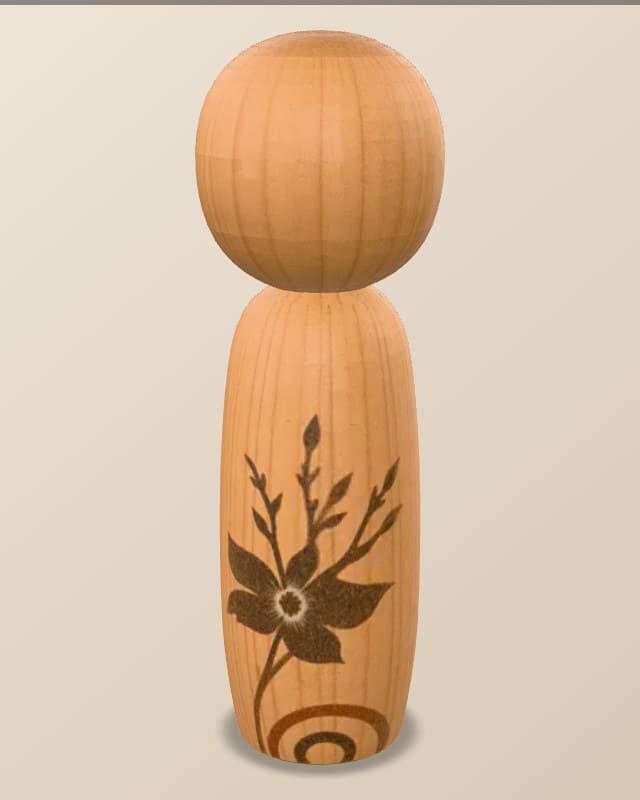
6 original, AI-assisted studies test an accessible 3D reading experience. They are creative interface assets—not photographed objects, tradition examples or maker attributions.

Enter the 3D studies
Static front render of the original Relief Bough AI-assisted wooden object studyRender · KOKESHI ATLAS 3D Object Lab

Original 3D study · AI-assisted

Relief Bough

A tall study that uses shallow branch-like relief to test how surface carving reads while the object turns.

Not a documented object, tradition or artisan work.

Explore in 3D
Static front render of the original Indigo Leaf AI-assisted wooden object studyRender · KOKESHI ATLAS 3D Object Lab

Original 3D study · AI-assisted

Indigo Leaf

A compact form exploring how a broad indigo leaf motif wraps around a curved wooden body.

Not a documented object, tradition or artisan work.

Explore in 3D
Static front render of the original Cedar Branch AI-assisted wooden object studyRender · KOKESHI ATLAS 3D Object Lab

Original 3D study · AI-assisted

Cedar Branch

A restrained study of darker wood, fine grain and a single green branch crossing the volume.

Not a documented object, tradition or artisan work.

Explore in 3D

The home page loads lightweight renders only. Interactive models and their runtime load after an explicit action on a detail page.

Myths & facts

What the evidence actually says.

Current finding · Not supported by available evidence

Does “kokeshi” mean “erasing children”?

We examine the dramatic claim without treating repetition, modern character play or cultural shock as historical proof.

Read the evidence review
01 / Travel

Travel with context.

Plan around current official information, respect working studios and know which details need checking again before you leave.

Plan a responsible visit
02 / Collect

Buy with better questions.

Learn to read photographs, inscriptions, condition and seller claims before making a confident attribution.

Open the buying guide

Journal

Notes from the research desk

Method first: how we verify places and how collectors can describe objects without overclaiming.

View the journal

Field Notes

Before We Recommend a Kokeshi Place

Why a name on a map is not enough—and what we check before publishing practical travel advice.

Read article

Collecting

Read the Object Before the Sales Story

A cautious first pass for online listings: photographs, inscriptions, condition and claims that need evidence.

Read article

Research

Why One Source Says Eleven—and Another Says Ten

Kokeshi classification is a research tool with a history, not a number to repeat without naming the source.

Read article

Collecting

Build an Object Record Before You Ask Who Made It

A repeatable documentation sequence for collectors, students and museums working from an unidentified kokeshi.

Read article